Summer Embroidery Design Png: A Designer Review
As a designer who has spent years translating digital concepts into tangible stitched goods, I approach every new asset with a mix of excitement and skepticism. The market is flooded with generic Illustrations that look great on a screen but fall apart under the pressure of a needle and thread. When I first encountered the Summer Embroidery Design Png, my immediate goal was to determine if it belonged in my professional toolkit or if it was just another fleeting trend. This review breaks down how this specific set of Graphics performs when moved from a high-resolution preview to real-world embroidery projects.
First Impressions: Mood and Visual Weight
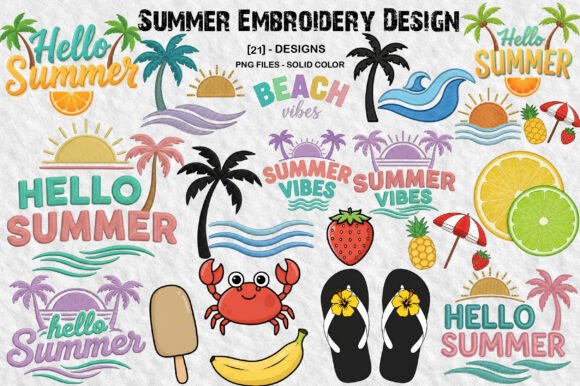
The initial download reveals exactly what is promised: twenty-one distinct PNG files at 300 dpi with transparent backgrounds. For a digital product seller or an Etsy seller creating mockups, this resolution is non-negotiable. However, for an embroidery project, pixel clarity is only half the battle. The visual personality of the Summer Embroidery Design Png leans heavily into bright, cheerful aesthetics. The shapes are bold enough to survive the translation process, which is often where lesser designs fail. When you zoom in, the lines are crisp, suggesting that they will not blur into muddy patches of color once converted into a machine embroidery design.
What stands out most is the balance between detail and simplicity. In the world of handmade product creation, overly intricate designs can lead to registration issues or excessive stitch density. These graphics seem to strike a sweet spot, offering enough character to be engaging without demanding a microscopic hoop size that would frustrate both the machine and the operator.
Real-World Application: From Screen to Fabric
To truly test the utility of these assets, I visualized a specific scenario: preparing a line of custom embroidered tote bags for a summer craft fair. Tote bags are a staple for small shop products, but they present unique challenges due to their texture and the need for durability. Using the Summer Embroidery Design Png as a base, I could immediately see how the vibrant motifs would pop against natural canvas or linen.
Imagine applying one of these designs to a sweatshirt embroidery project. The softness of fleece requires a different approach than cotton, often needing more stabilizer and careful attention to thread colors to prevent sinking. The clean outlines found in these PNGs suggest they would work well with a combination of fill stitch for the main body and satin stitch for the borders, ensuring the design remains visible even on textured fabrics. For a baby embroidery item, such as a bib or a onesie, the playful nature of the summer theme fits perfectly, provided the final stitching is smooth and free of sharp edges that might irritate sensitive skin.
For those running a craft business, the ability to quickly generate printable mockup images is invaluable. Since these are high-resolution PNGs, they serve dual purposes: they can be used directly for digital sales as digital product previews or traced and digitized for physical custom apparel. This versatility makes them a strong candidate for expanding a portfolio of design assets without the overhead of commissioning original artwork.
Navigating Challenges: Where Caution Is Needed
While the potential is high, experienced designers know that no file is universally perfect. There are specific scenarios where the Summer Embroidery Design Png requires careful handling. If you plan to use these on dark fabric, the transparency of the background is helpful, but you must ensure the underlying layers provide enough coverage. Without proper backing or a dense fill stitch, the design might look washed out on navy blue or black garments.
Another consideration is the embroidered patch application. If you intend to cut these designs out as patches, check the internal details. Tiny elements might get lost during the cutting process or become too fragile after repeated washing. Similarly, on curved surfaces like caps, the geometry of the design must be flexible. Some of the wider illustrations in this set might distort if forced onto a structured brim without significant resizing or re-digitizing.
Fabric texture also plays a critical role. On highly textured materials like heavy denim or ribbed knits, fine details in the Graphics may not stitch cleanly. It is always wise to test the design on scrap fabric first. This step allows you to adjust the stitch density and verify that the running stitch or outline stitches hold up against the weave of the material. Ignoring this step can lead to puckering or thread breakage, ruining a finished product that took hours to create.
Value for the Commercial Creator
One of the most attractive features of this collection is the licensing. With commercial use allowed, these files open doors for Etsy sellers and boutique owners looking to scale their offerings. Whether you are selling the physical personalized gift or the digital embroidery file itself, having a clear license removes legal ambiguity. This is crucial for maintaining customer trust and brand consistency in a competitive marketplace.
However, remember that "commercial use" applies to the finished goods or the resale of the file, depending on the specific terms. Always double-check the license agreement included in your download. For a small shop product line, using consistent, high-quality imagery like the Summer Embroidery Design Png elevates the perceived value of your brand. Customers today expect professionalism; a blurry or poorly stitched logo can deter buyers instantly.
Practical Designer Notes for Success
To get the most out of this collection, follow these practical steps before committing to a large production run:
- Test on Scrap Fabric: Never skip the test stitch. Use the same fabric and stabilizer you plan to use for the final project to gauge tension and density.
- Check Color Contrast: Ensure the thread colors you select stand out against the background fabric. High contrast improves readability and visual appeal.
- Review Hoop Size: Confirm that the design fits within your machine's maximum hoop size without needing awkward tacking or re-hooping.
- Inspect Small Details: Zoom in on the PNG to identify any tiny gaps or thin lines that might disappear during the digitization process.
- Use Proper Stabilizer: Depending on the fabric weight, choose a tear-away, cut-away, or water-soluble stabilizer to support the applique design or fill areas.
- Verify Licensing: Re-read the terms regarding selling finished items versus reselling the digital files to avoid copyright issues.
In conclusion, the Summer Embroidery Design Png offers a solid foundation for a variety of creative endeavors. It bridges the gap between digital art and tactile craftsmanship, providing the clarity and resolution needed for professional results. While it requires the standard diligence of any embroidery project, its versatility makes it a worthwhile addition to the library of any serious maker or entrepreneur.